
NEVER MISS AN UPDATE
SUBSCRIBEFor global buyers, choosing gym equipment is no longer only about appearance or price. Racks Rigs must support safe training, efficient space use, and dependable long-term service. A busy training floor exposes weak welds quickly. Loose bolts, unstable bases, and poor adjustment systems can disrupt daily operations.
The Health & Fitness Association’s 2024 Global Report estimated that the fitness industry reached about $96.7 billion in revenue in 2023. It also reported approximately 184 million members across 73 markets. These figures show why commercial buyers need equipment that can handle repeated use, different body sizes, and varied training styles. The ACSM Worldwide Survey of Fitness Trends also continues to identify strength-related training as a major industry focus. Demand is growing.
This guide reviews seven racks and rigs suitable for international purchasing decisions. The comparison considers frame steel, load capacity, attachment options, footprint, corrosion protection, warranty support, and installation requirements. Shipping weight matters too. A compact rack may reduce freight costs, while a modular rig can serve more users within the same floor area. However, published specifications do not always reflect real-world stability. That remains a weakness in many equipment comparisons. Buyers should request product drawings, test evidence, replacement-part policies, and regional compliance information before ordering. Prices can change with steel costs, shipping routes, and local taxes. These seven options offer practical starting points, not universal answers.
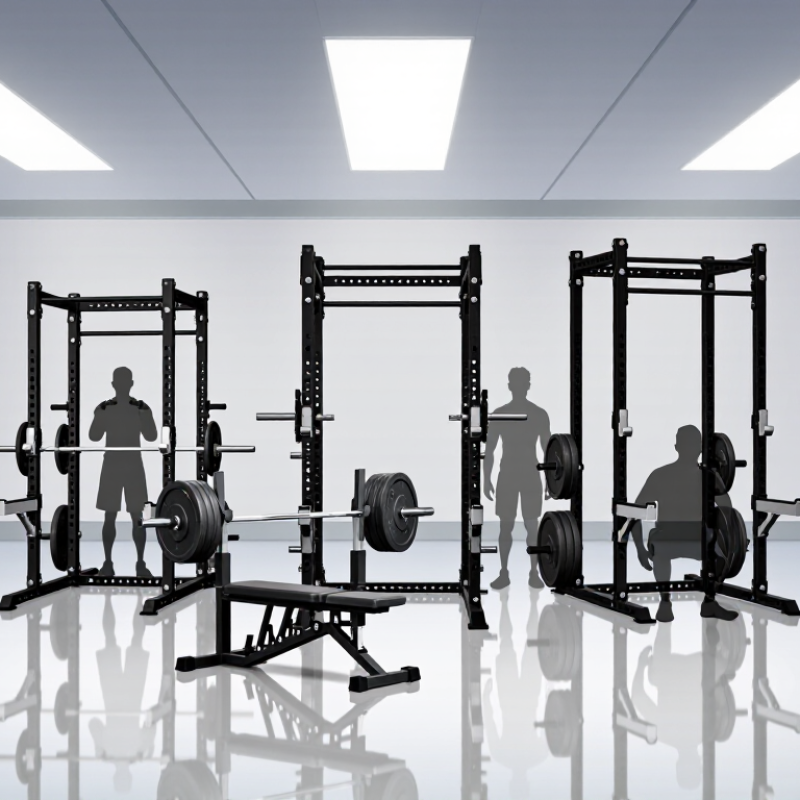
7 Best Racks and Rigs for Global Buyers?
Rack selection starts with the load, not the catalogue image. Seven common formats serve different warehouse problems: selective pallet racks, drive-in racks, push-back racks, carton flow racks, cantilever racks, mobile racks, and mezzanine systems. Selective racks provide direct access. Drive-in systems maximize dense storage. Push-back racks support multiple pallets by depth. Carton flow suits fast-picking items. Cantilever racks handle pipes and timber. Mobile racks save floor space. Mezzanines add usable levels.
Most systems can be engineered for 500–2,000 kg per pallet position, level, or bay, but these figures are not interchangeable. Upright thickness, beam span, floor strength, anchor design, and forklift impact all change the safe rating. EN 15635 requires regular inspection and documented damage control. OSHA guidance also stresses visible capacity labels and competent installation. Load labels matter.
MHI’s 2024 Annual Industry Report identifies warehouse optimization and automation as continuing investment priorities among supply-chain professionals. That trend increases pressure on storage density, but density can reduce access speed. In site audits, damaged frames and uneven floors often receive less attention than software. That is a mistake. A 2,000 kg design may perform poorly on a cracked slab. Global buyers should request stamped calculations, testing records, corrosion specifications, and local compliance evidence. Specifications are sometimes incomplete. Good purchasing teams challenge them before shipment.
Typical rated working loads for common rack and rig formats. Actual capacity depends on material grade, span, anchoring, safety factors, and local engineering standards.
Selective pallet racks and cantilever racks are commonly used for warehouse storage, while A-frames, pipe racks, and modular platforms support long, bulky, or production-line loads. Mobile racks and heavy-duty shelving are suited to applications where space efficiency and frequent access are priorities.
Global buyers comparing the seven best racks and rigs should begin with aisle geometry, not appearance. Selective, double-deep, drive-in, push-back, pallet-flow, cantilever, and mobile systems serve different handling patterns. A 2.4–3.6 metre aisle is a practical benchmark for many pallet operations, but forklift type and load dimensions can change it quickly.
WERC’s 2024 DC Measures report supports using percentile benchmarks instead of one universal target. Pallet density often rises when aisles narrow, yet access usually falls. A 10–20% density gain may be unattractive if operators need frequent pallet retrieval. Industry design studies commonly place usable pallet occupancy near 80–90%; higher figures can create congestion. Leave space for damaged pallets, seasonal peaks, and inspection work.
Throughput must be measured at the dock, not promised on a brochure. A conventional pallet area may handle roughly 80–150 pallet movements per hour, depending on travel distance, labor, and staging space. Automated systems can exceed that range, but they require disciplined data and stable SKU profiles. MHI’s 2024 Annual Industry Report highlights automation and inventory visibility as major investment priorities. Still, I would challenge any design using only peak hourly output. Peak demand is temporary. Morning congestion is not. One overlooked turning point near the loading door can reduce real throughput more than a small aisle-width change.
Global buyers now compare seven rack and rig options: selective, drive-in, push-back, pallet flow, cantilever, mobile, and automated storage systems. Each design solves a different warehouse problem. Selective racking offers direct access to every pallet, making it practical for varied stock. Drive-in systems increase density, but forklifts must enter deep lanes. Push-back storage supports faster loading and unloading, although stock rotation needs closer control.
Pallet flow racking suits products requiring strict first-in, first-out movement. Cantilever racks handle long goods such as pipes, timber, and metal profiles. Mobile racks can release valuable floor space, yet their moving bases require careful maintenance. Automated storage systems improve accuracy and vertical capacity, but they demand stronger software support and higher initial investment. Zebra Technologies’ 2023 Warehousing Vision Study reported that 58% of warehouse decision-makers planned automation deployment by 2028. That trend matters when comparing future operating costs.
Site evidence should guide the final choice. Measure pallet dimensions, load weights, aisle widths, ceiling height, and peak seasonal volume. The 2024 MHI Annual Industry Report also identified rising investment in digital supply-chain technologies, reinforcing the need for rack systems that can exchange reliable inventory data. Safety remains practical, not decorative: inspect frames, beams, anchors, and impact points regularly. A dense system may look efficient on paper. It can become restrictive during expansion. This is where buyers should pause, test a small zone, and question their first assumption.
Typical planning ranges are shown for general international comparison. Actual capacity, dimensions, seismic requirements, clearances, and protection systems must be verified by a qualified storage-system engineer under the applicable local regulations.
| Rack or Rig Type | Best Application | Typical Storage Density | Typical Load per Pallet Position | Selectivity | Forklift or Handling Requirement | Main Advantages | Key Limitations and Safety Considerations |
|---|---|---|---|---|---|---|---|
| Selective Pallet Racking | General-purpose warehouses with many stock-keeping units and frequent access. | Baseline density; normally about 30–40% of the storage floor area is occupied by rack structure and access aisles. | Commonly 500–1,500 kg per pallet position, depending on beam length, frame height, decking, and design. | Excellent. Every pallet position is normally directly accessible. | Counterbalance or reach trucks are commonly used. Aisle width is often about 2.7–3.5 m, depending on the truck. | Flexible layout, easy stock rotation, straightforward expansion, and broad compatibility with standard pallets. | Uses more floor space for aisles than high-density systems. Uprights, beams, and load limits require regular inspection and protection from impact. |
| Drive-In Racking | Large quantities of the same product with low SKU variety and a last-in, first-out flow. | High density; it can use much more of the available floor volume than selective racking by reducing operating aisles. | Commonly 500–1,500 kg per pallet position, with rail and upright capacity determined by the engineered design. | Low. Access is generally limited to the pallet lane ends. | Forklifts enter the rack structure. Operators need controlled speed, accurate alignment, and suitable overhead clearance. | High cube utilization, reduced aisle space, and efficient storage of uniform products. | Limited selectivity, slower stock rotation, and greater risk of rail or upright impact. Suitable pallets and strict operating procedures are important. |
| Push-Back Racking | Multiple pallets per SKU where a last-in, first-out method is acceptable and faster access is needed than drive-in. | High density, typically higher than selective racking but lower than the most compact drive-in layouts. | Commonly 500–1,500 kg per pallet position; cart, rail, and frame capacity must be calculated for the intended load. | Moderate. Several pallets can be stored in one lane, but the front pallet is accessed first. | Forklifts usually operate from the aisle without entering the rack. Load placement requires controlled horizontal pushing. | Good space utilization, quicker loading than drive-in, and fewer rack-entry movements. | Generally not suited to strict first-in, first-out control. Cart alignment, pallet condition, and lane loading sequence are critical. |
| Pallet Flow Racking | Perishable goods, batch-controlled inventory, and operations requiring first-in, first-out flow. | High density with separate loading and picking aisles, reducing cross-traffic and improving cube use. | Commonly 500–1,000 kg per pallet position, subject to roller, brake, frame, and pallet specifications. | Good for FIFO control; individual pallet access is limited within a lane. | Forklifts load from the replenishment side; pallets move on gravity rollers toward the picking side. | Reliable FIFO rotation, efficient replenishment, reduced travel distance, and clear separation of loading and picking activities. | Higher initial cost than basic selective racking. Pallet dimensions, underside construction, wheel condition, and load consistency must be compatible with the rollers. |
| Cantilever Racking | Long, bulky, or irregular products such as timber, pipe, profiles, panels, furniture, and metal sections. | Efficient for long loads; storage density depends heavily on product length, arm spacing, and handling aisle design. | Commonly 250–2,500 kg per arm level, with the total capacity determined by column, arm, base, and anchor design. | Good. Products can normally be accessed from the front without vertical rack posts blocking the load. | Side loaders, reach trucks, cranes, or forklifts may be used depending on product length and aisle geometry. | Adjustable arms, open fronts, easy loading of oversized goods, and flexible product separation. | Requires stable floor anchoring and careful control of uneven or off-center loads. Long products may need anti-roll devices, supports, or end stops. |
| Mobile Pallet Racking | Cold stores, archives, warehouses, or facilities where high storage density is more important than simultaneous aisle access. | Very high density because racks move on floor rails and only one or a few access aisles remain open at a time. | Commonly 500–1,500 kg per pallet position, subject to the mobile base, rack frame, floor, and drive-system design. | Good when an aisle is opened, but only selected aisles are typically available simultaneously. | Forklifts use the opened aisle. Powered movement requires control panels, sensors, interlocks, and emergency-stop systems. | Excellent floor-space savings, improved use of building volume, and reduced fixed aisle requirements. | Higher capital and maintenance cost, slower simultaneous access, and stricter floor-flatness, emergency-clearance, and pedestrian-safety requirements. |
| Automated Storage and Retrieval System (AS/RS) | High-throughput facilities with repeatable pallet handling, centralized inventory control, and limited manual access. | Very high density through narrow aisles, tall storage, and software-controlled locations. | Commonly 500–1,500 kg per pallet position; system capacity depends on the crane, conveyor, rack, pallet, and building design. | High system-level selectivity, subject to software rules, equipment availability, and replenishment strategy. | Automated cranes, shuttles, conveyors, sensors, warehouse-control software, and compatible pallets are required. | High throughput potential, accurate inventory tracking, reduced manual travel, and effective use of tall buildings. | Highest investment and integration complexity among these options. Requires reliable power, preventive maintenance, emergency procedures, and technically compatible unit loads. |
7 Best Racks and Rigs for Global Buyers?
For global buyers, a rack’s load rating is only one part of a safe storage system. Safety compliance begins with accurate building, pallet, and operating data. EN 15512 provides design principles for adjustable pallet racking systems. Buyers should request calculations covering beam capacity, upright stability, connection strength, and frame bracing. Do not accept a generic certificate. Rack geometry, steel properties, and loading conditions must match the supplied equipment.
ANSI MH16.1 offers a recognized North American design framework for industrial steel storage racks. It also addresses structural performance and load assumptions. The correct standard depends on the installation location and approval process. A warehouse in an earthquake zone needs more than ordinary vertical load calculations. Site-specific seismic design should consider soil conditions, building movement, anchorage, and rack height. A qualified structural engineer should review these factors. I have seen projects rely on standard drawings alone. That shortcut creates uncertainty.
NFPA 13 concerns sprinkler installation and fire protection, but it does not replace rack engineering. Check flue spaces, sprinkler clearance, storage height, and commodity classification before installation. Clearances can change when cartons, pallets, or shelf levels change. Coordinate rack drawings with fire-protection plans and local authority requirements. Keep calculation sheets, material records, inspection reports, and anchor details accessible. One practical lesson is often overlooked: compliance is not static. Inspections, impacts, and layout changes can affect safety. A system may meet the original design, yet need review after one damaged upright.
The seven strongest options include pallet racks, cantilever racks, mobile racks, boltless shelving, drive-in racks, shuttle racks, and enclosed equipment rigs. Each serves a different operating pattern. Pallet racks suit mixed cartons, while cantilever racks handle timber, pipes, and long steel sections. Mobile racks save floor space but require smoother floors and stricter maintenance.
Total cost of ownership extends beyond the purchase price. Include freight, duties, installation, inspections, spare parts, and energy use. A low-cost frame may need expensive local reinforcement. Ask for load-test reports, material specifications, coating data, and traceable production records. Regional certification requirements differ, so confirm documents with an independent engineer or local authority. Paperwork matters.
Lead times can range from two weeks to several months. Standard shelving usually ships faster than automated shuttle systems. Coastal warehouses need corrosion-resistant finishes, while seismic areas may require anchoring and revised load calculations. Check door widths, pallet dimensions, ceiling height, and forklift turning radius before ordering. I have seen buyers measure the rack bay but forget the loading dock. That mistake delayed installation. Exchange rates and replacement-part availability also deserve a line in the matrix, because a technically excellent rig can still perform poorly in its actual region.
Get in touch and we’ll respond within 30 minutes during business hours – every time.